
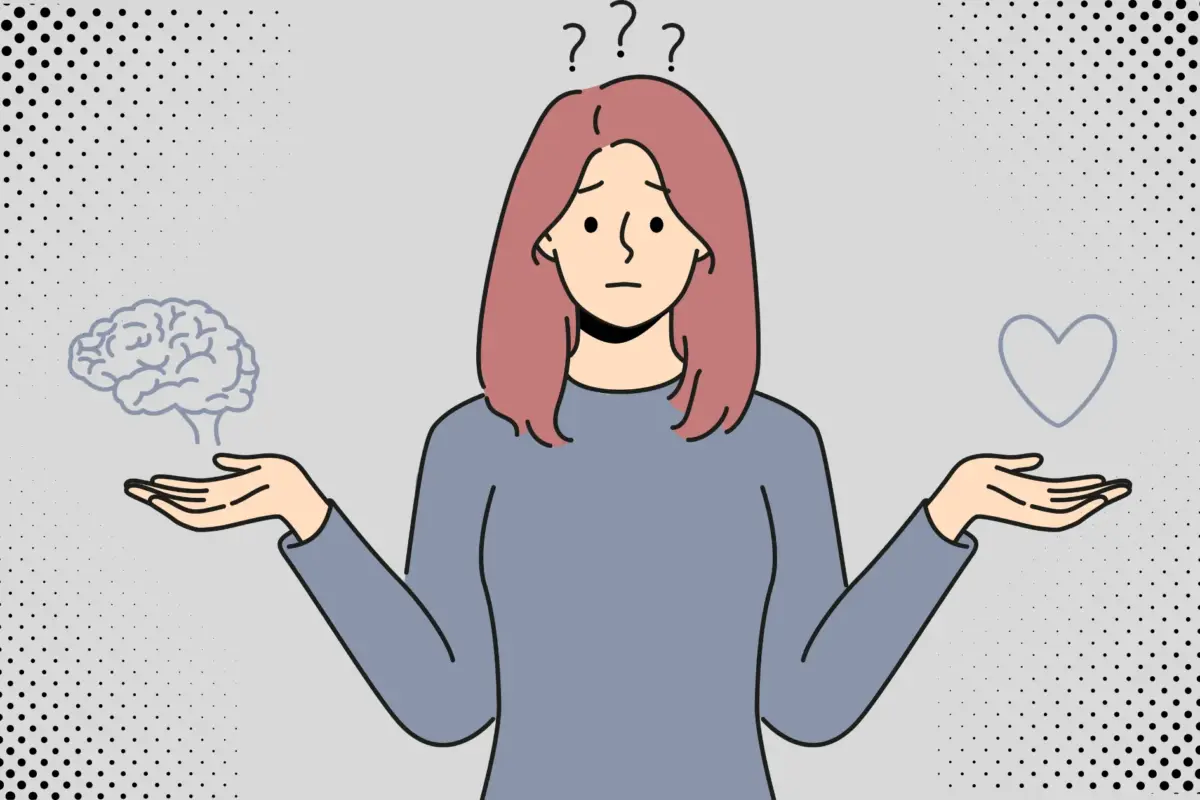
Five Reasons Why Adolescents Need ‘Emotional Intelligence’
Scenario 1
During a workshop, I had audience who were high school students. I asked them to list their challenges which they hate and given an opportunity they want it to disappear.
We received assorted responses.
Major baskets were –
- Examination
- Competition
- Pressure
- Confusion of right versus wrong
- Rivalry & Jealousy
- Anxiety
- No worrying of the future and few more.
Scenario 2
During a few individual counseling sessions, I encountered below statements chronically:
‘I prefer to spend time on the net, visit social media to destress myself than talking to others at home’
‘I don’t want to play with others as I don’t think it’s a fair play’.
‘I can’t control myself when I don’t get what I want’.
Scenario 3
Below statements sound to be funny, but they are true discourses during an interview process:
- There is no necessity to think and remember, google gives me all answers
- If I speak a little louder, I have read that it’s a sign of confidence
- I haven’t fought with any, I think I have good leadership skills.
Well, the main reason to write this snippet was a few live experiences listed above. All this were with teenagers, and adults within 25 years, who have just spent less than one-third of their lives and when we contemplate little deeper and envisage their future lives assuming these traits gets nurtured because there is none to either overrule it or influence to erase the mis-definitions, and the way they would build their personalities plus belief systems, social circles and relationship management – there is an alarm ringing. Upon that, industry and organizations emphasize on emotional intelligence is one of the primary job skill required by 2020-25 and in years to come.
Emotional intelligence is still implicit and misconstrued. Very strongly I sometimes feel it is abused. But what we do discern is that emotions play a very critical role in the overall quality of our personal and professional lives, more critical even than our actual measure of brain intelligence and IQ. While tools and technology can help us to learn and master information, nothing can replace our ability to learn, manage, and master our emotions and the emotions of those around us.
While most parents accentuate academic intelligence, scores, and IQ levels flaunting with Olympiad and NTSE scores, they miss understanding what enables IQ is EQ- the emotional intelligence index which is a catalyst and serves to make more successful individuals.
We don’t need our children to google – How to develop a thinking process? Or How to build better rapport with people sitting with gadgets the entire day.
While there is natural physical, psychological, cognitive, and intellectual development in this critical age, it becomes more important to give them the right course of self-management embedded with fundamentals of emotional intelligence.
According to the World Economic Forum’s Future of Jobs Report, emotional intelligence will be one of the top 10 job skills in this decade
The awareness that emotional intelligence is an important job skill, in some cases even surpassing technical ability, has been growing in recent years. In a recent Career Builder Survey of more than 2,800 hiring managers and human resource professionals, 74% stated they valued emotional intelligence in an employee over IQ; 75% said they were more likely to promote a highly emotionally intelligent employee and 49% claimed they’d pass up a candidate with a high IQ but low emotional intelligence.
While organizations and many others in the arena are putting such a high premium on Emotional Intelligence, here are the top five reasons why should it be nurtured right from teenagers.
Introspection to understand oneself
What makes my personality? What leads to me being with my habits, behavior, and perception? – With introspection decluttering starts enabling one to answer more critically and logically. The rational approach decreases stress providing even temperament, helping to regulate with mood swings, and avoids depression. Mental well being affects attitude inclines more on assertive thinking with a positive approach towards life around us.
Build rapport with people & relationships
Social Skills is one of the most important parts of emotional intelligence. When we manage ourselves better, it gets extended to others in understanding their feelings, emotions and we start to be good listeners with which empathy builds leading to better relationships and broader networks.
Communication
With broader networks shapes communication and we fathom the fact of non-verbal communication being used majorly does not undermine the importance of word selection, it’s true that our tone and body language — which are ordained by emotions — have a colossal bearing on how we understand and speak to one another. An emotionally intelligent person will find it easy to understand the meaning and motivations of others, and at the same time will do a better job of expressing his or her personal thoughts which also leads to effective conflict resolutions.
Nurture creativity and critical thinking
Thinking is an expensive avenue. While both creativity and critical thought process resides in the human mind, what governs the situation is more consequential. While creativity also needs a lucid mindset. And that arrives with wholesome cognitive and intellectual development whose engrained matter is emotional intelligence.
Better decision making and leadership skills
Being a leader is not everybody’s cup of tea. Taking bold decisions both calculative and cautious needs a fair amount of headship which comes as a combination of analysis, self-confidence and introspection on one’s own strength. Better decisions come from better judgments which in turn comes from clarity. Not only decision making, but it also helps with disaster recovery if things get misaligned. As the knack of getting things done increases, influencing others surges anywhere, even at organizations regardless of an official title. An ability to rise above daily exasperations earns people with high emotional intelligence the respect from across the spectrum from top to bottom. One is regarded and remembered for virtues and morally being upright.
While these are the results, think of planting it at the inception of one’s paramount developmental age, nurturing it with the right magnitude can create amazing results.
That reminds me of saying to my students often that – I carry an ambition to develop an emotionally intelligent generation.
Click Here to book your counseling session today!
